Sunday, January 15, 2012

Nigeria EFCC Misuse of Image

Picture from The Guardian Nigeria: http://bit.ly/wVqNjm


Today I am absolutely flabbergasted by this situation. Here is the real version...Emeka Ugwuonye resides in Rockville, MD. USA. On a recent trip to his native homeland Nigeria he was arrested and held for about nine months by the Nigerian governmental anti graft agency EFCC. The ironic piece is that Emeka Ugwuonye was granted bail in court which the EFCC overturned. During the 9 months he was incarcerated he was denied a simple hearing in front of a judge, and when it was made possible for Emeka to be in front of a judge, the EFCC tried everything to sabotage his trial. If it wasn't for a change in administration in the EFCC management hierarchy Emeka would still be incarcerated.
How is this justice. The most disturbing piece of this, is that despite Emeka facing trial, his face is being used to advertise the Nigerian EFCC agency. Which by the way is funded through Germany, UK, USA, France, Holland, and Nigeria. A quality use of fiscal resources in times of international financial distress...would you agree? I am sure if you asked Emeka Ugwuonye he would state that he feels justice has been served...I know I would in his situation...I hope you can sense my tone of sarcasm. Talk about innocent until proven guilty....frightening isn't it?

Saturday, January 14, 2012

Nigeria Civil War 42 years After: Igbo Remembering The Death And The Missing


Today 15th Jan. 2012, is the 42nd anniversary of the Nigeria/Biafra war. It is today that I reflect with a heavy heart. While some might think that this war had no impact on someone that was just an infant at the time and the infants born few years after, I disagree. This war has permeated past, present and likely future generations.


       Pictures of Igbo children during the Nigeria civil war. Image from:antingsofthetalakawa.wordpress.com

Post civil war, Igbo Nigerians found themselves struggling to meet their basic needs. These needs include good nutrition, quality sanitation, respectable medical facilities, highly regarded educational institutions, adequate housing, as well as an affordable standard of living. I stop and ask myself...”Shouldn’t these be common expectations...unfortunately in the current society they are a luxury only afforded to those on the top rungs of the societal ladder.


                                         Image from: messageboard.biafranigeriaworld.com

I ask you to join me in reflecting not only on those who have died as a result of the Nigerian civil war but also all Igbo people who have lost their lives in Northern Nigeria Political-Religious crisis/riots. We need to reflect and take action on how we can raise the standard of living for the lower half of the Nigerian society. How do we bring about a revolutionary change, one which unites the country around a common set of core values, and one that encourages everyone to act in the best interest of all people. We need to work to advocate for those who can not advocate for themselves.


The Nigerian society is only as strong and as healthy as its weakest link. How will you work to raise the standard for all? Perhaps it could be your co-worker, your cousin, your brother, your sister, your child or worse yet you who occupy the bottom echelon of Nigerian society.

Thursday, December 1, 2011

We are our own worst enemies by Kaanayo Nwachukwu

a) Your child comes down with a headache, maybe fever. You get worried, even scared. You rush to the nearest chemist, could be a pharmacy. You buy some analgesic. You feed your child the medication. And you kneel down to say a pray for him or her. A combination of God and medication will heal your child in a few hours, you think. Your child is now sleeping soundly. One, two, four, five, seven hours or more. He or she is getting much desired rest, you assume. You go to check in on him or her, regardless. In the room, you listen. You hear nothing. No snoring. You touch your child. The skin now becomes pale white and stiff and loses its sense of touch: your child is dead. The adulterated panadol or paracetamol you fed your child has killed him or her. You cry! You ask God why.


b) Your car develops a mechanical fault. You rush to Idumota or Aba or Nkpo or Nnewi or wherever. A guy talks you into parting with your hard-earned money to purchase a brand new 'original' Japanese spare part. A day or two after, your car dies again. You also need to replace the very same part you had paid for just a couple of days or so ago. You ask God why. 

c) You finish your university education in Nigeria. Five, ten years and counting, you have got no job in your own fatherland. You want to explore opportunities in other countries. You get your green passport ready. You arrive at a Western country’s embassy in Lagos or Abuja at midnight. You stand in line in front of their gate till 9 a.m. They take your money and then deny you visa. You raise the palms of your hands to heaven. You cry. You ask God why.

Do you really want to know why? Okay, here’s why:

d) It is because Nigerians have come to be known for lying and cheating. If we can't even trust ourselves, why should anyone else? The drug that killed that innocent child was faked by one of us. That spare part that got you stranded in the rain right in the middle of nowhere was manufactured in Aba or Nnewi or Lagos and was deliberately sold to you as ‘original’ Japanese part by a fellow Nigerian. You were denied visa at that embassy because of the sundry atrocities your fellow Nigerians commit in that country you want to journey to. 

e) We are all guilty of destroying Nigeria's image -- both at home and abroad. Yet, we shout to high heavens and complain about our leaders. For us to usher in that Nigeria of our collective dream, we need to first be good followers. Opportunities abound everywhere, Nigeria and beyond. But we can only tap into them when we turn a new leaf and begin to give a hoot about what we want our people and the world to think of us.

Kaanayo Nwachukwu
is a Speaker, Commentator, and Writer. He is the author of the highly acclaimed memoir, "A Dream of Canada: An Incredible Story of Struggle and Overcoming."

Friday, November 25, 2011

Sex Abuse: The role of Bystanders

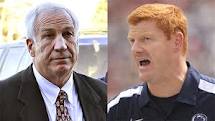
As a nation we have been plagued by the Penn State Scandal. While this has been the most recent of sex scandals it is utterly wrong that this has occurred throughout the US for a number of years. There are countless victims that fall victim to sexual predators every year. While the Penn State Scandal is disturbing on many levels, probably the most disturbing point is the cover up that took place spanning many years harming many children.


Why did these men choose to turn a blind eye on the actions that were being taken by Sandusky. Why did they choose loyalty over what is morally, legally and ethically right? How can they live with themselves knowing that they contributing to the molestation of so many boys?

While the way Penn State handled this situation in the beginning is deplorable, they have taken actions now that show that no one is above the law and that they will not stand for this behavior regardless of who you are.

This sex scandal is not unlike many sex scandals that have occurred for the past several years within the Catholic church. Once again these sex scandals have been covered up by the supreme leaders of the church. How can church leaders preach the moral and Christian code of life while covering up sex scandals that are occurring? To me this is bigotry of the highest level.


I am a firm believer that sexual predators need to be held accountable to the highest extent of the law, I also feel that we need to get tougher on those that knowingly allow the abuse to continue. Aren’t they just as much to blame? Think of how many fewer victims would have been sexually assaulted had the Catholic Church took a firm stand in the beginning of the sex abuse scandal and turned their priests over to the authorities rather than defending them? How would the Penn State scandal have changed if Paterno would have taken the right actions when he first found out about the abuse?

The one positive light in this controversy is that hopefully awareness has been raised and people will understand that this is not okay regardless of who you are. All need to be held accountable for either sexually assaulting kids or for covering up the actions of others.

Blog Guest writer:
Dr. Nee Schouweiler : Is a college professor and an advocate of minority education

Thursday, November 24, 2011

The Osu Caste System of Ndigbo is obnoxious: By Kaanayo Nwachukwu


The Osu caste system of Ndigbo is obnoxious, plain wrong, abusive and discriminatory. It is as despicable as it is evil. And it is worse than racism. To think this barbaric system is the brainchild of a people who constantly complain of marginalization in Nigeria is very mind-boggling.

This barbaric system is archaic and treats fellow humans as inferior beings, as well as keeps them in a state of permanent and irreversible disability in the community.

The Osu (or the slaves or the strangers or the outcasts or the untouchables) are forbidden from dancing, drinking, holding hands, associating or having sexual relations with non Osu (or the so-called freeborn or the masters). They are never allowed to break kola nuts at meetings or pour the libation or pray to God at any community gathering, as their prayers are believed to be harbingers of calamity and misfortune.

Abuses and discrimination meted out against the Osu in Igboland include but are not limited to: parents poisoning and disinheriting their children; heaping harvest offering separately in churches, refusal of membership in social clubs or organizations, violent disruption of marriage ceremonies, denial of chieftaincy titles, deprivation of land and property; expulsion of wives, ostracism, organized attacks and etcetera.

Although in 1956, the government of the then Eastern Nigeria passed a law abolishing this harmful, dehumanizing and discriminating tradition, 50 years after the enactment of this legislation, nobody has been prosecuted or convicted for breaking or circumventing it. All that the legislation has achieved, at best, is sort of drive the practice underground.

Old habits die hard, they say, but if encouraged, the new generation of Ndigbo, methinks, can bring this ancient practice to an end. Please, let's work together to make this antiquated practice history in our land, for nobody is born a slave. We are all born free. Have your say!

Kaanayo Nwachukwu  
is a Speaker, Commentator, and Writer. He is the author of the highly acclaimed memoir, "A Dream of Canada: An Incredible Story of Struggle and Overcoming."

Wednesday, November 23, 2011

Celebrating The Nigerian Liberator Blog First Year


Thanksgiving is the perfect time to express our sincere appreciation for your readership and your partnership. At the Nigerian Liberator we strive to expose the corruptions that infiltrate our globe. Our writers are activists with a keen eye on social justice and advocating for those that cannot advocate for themselves. Thank you for your readership and collaboration.

Tuesday, November 22, 2011

Removing petrol subsidies in Nigeria is senseless - by Kaanayo Nwachukwu

Before anyone accuses me of being, to a great extent, responsible for making Goodluck Jonathan president of Nigeria because of the roles I and some of my friends played before, during and after his election, let me say right off the bat that his plan to remove fuel subsidies effective from 2012, is wrong, senseless and ill-thought out.

The government's argument that Nigeria is the only place on Earth where life is still being subsidized is a very big fat lie. Subsidies exist in one form or the other in many countries.

The United States pays around $20 billion per annum to farmers in direct subsidies as farm income stabilisation. For every dollar an American farmer earns, 62 cents come from some form of government subsidy. The estimated total subsidies to US farmers in 2009 from all levels of government were $180.8 billion. The Common Agricultural Policy (CAP), a system of European Union subsidies, represented 48 percent of the EU’s budget of €49.8 billion in 2006. In 2010, the EU spent €57 billion on agricultural development, €39 billion of which was spent on direct subsidies. China has several export subsidies.

So, the whole talk about how much subsidies cost the government of Nigeria is simply bunkum or hogwash, for lack of better words. The claim by the de-subsidisation lobbyists that petrol is cheapest in the world in Nigeria is untrue. Given Nigeria's per capita income, at N65 per litre, petrol is actually not cheap. In the UAE and Saudi Arabia, where per capita income is several times higher than what we have in Nigeria, a litre of petrol sells for around 1AED (N45) and SRO 0.45 (N18) respectively. In these countries, the citizens additionally enjoy their God-given natural wealth in several other ways. As one of the largest oil producing and exporting countries in the world, in which way has the ordinary Nigerian felt the impact of the wealth crude oil has brought and still brings to his or her country?

All the government's talk about how much it costs it to subsidize petrol for Nigerians is akin to moaning about how much you spend to keep your children healthy and happy.

Yet, our legislooters and executhieves lack no billions of dollars they can stash away in private bank accounts in the West.

Kaanayo Nwachukwu is a Speaker, Commentator, and Writer. He is the author of the highly acclaimed memoir, "A Dream of Canada: An Incredible Story of Struggle and Overcoming."